


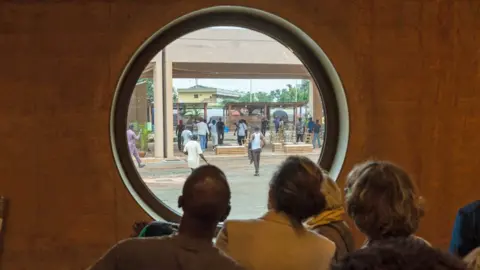
The nation's impressive new Museum of West African Art (Mowaa) has found itself in the center of regional political struggles during the week it was supposed to – but was unable – to open its doors to the general public for the initial occasion.
The Grand Vision
The 15-acre facility stands in the core of Benin City, capital of the southern area of Edo – and features an historical dig and facilities created by celebrated Ghanaian-British architect Sir David Adjaye, particularly noted for the Smithsonian African American Museum that began operations in Washington in 2016.
It has been 60 months in the making – and is designed to showcase both the heritage and the present of creativity in the region famous for the historic artworks, cultural objects stolen from the royal palace by UK forces in the nineteenth century.
Setup and Prospects
It is impressive – and ahead of the scheduled opening, Mowaa was buzzing with workers committed to demonstrate it is a venue that can compete with well-known museums and galleries in the West.
Inside preservation experts precisely revealed artworks from protective packaging, checking each item and taking meticulous records before placing them on walls and bases.
Specialists adjusted climate control systems. In the research lab, personnel calibrated devices designed to conserve historical items.
Funding and Economic Goals
The initiative has been the concept of businessman Phillip Ihenacho – now Mowaa's chief executive.
"I aim us to have a major economic benefit on area populations in the vicinity," he told journalists, mentioning that he aspired to make the city "a tourism center."
Mowaa, a charitable national foundation, envisions itself creating more than 30,000 work positions and providing over $80m each year to the area arts sector through collaborations and events.
Investment and Administrative Problems
It has required $25m to achieve this stage – money gathered from different donors, such as the international partners, the British Museum and the regional authorities.
But currently the local government has withdrawn support from under it – terminating the utilization of the site on which the building was erected.
An official representative clarified this was because in the early agreements it had referred to itself as the Edo-named institution – and it had later removed "Edo" from its designation.
Unrest and Official Response
This statement followed protests on recently, when people entered the facility demanding it be called the Museum of the Benin Kingdom.
A boisterous assembly confronted overseas dignitaries at the facility prior to the inauguration – requiring them to be escorted out under police escort.
National leader Bola Tinubu has also stepped in to work to address the dispute, creating a presidential committee to manage the situation.
Political Complexities
But in what way has this evolved into so controversial – and such a reputation problem?
A great deal of it results from local power struggles at a local state level, as it was Edo's previous governor Godwin Obaseki – whose governance finished last year – who was a major backer of the museum.
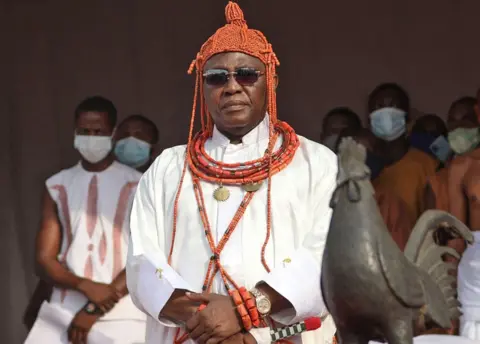
And it seems the leadership of the new governor, a close ally of the area king, called the royal figure, may want more of a stake in the venture. The demonstrators on that day, for case, were calling for that the museum be put under the supervision of Oba Ewuare II.
The Cultural Artifacts Debate
This brings into focus the contentious issue of the historical artworks, one of the region's most famous artistic heritage.
Because even if the museum does eventually welcome visitors, these bronzes will be clearly not present.
They are metal, elephant tusk and timber sculptures that once decorated the king's residence of the ancient kingdom before British soldiers took them in the colonial era during a colonial invasion.
Nowadays, thousands remain distributed across galleries in Western nations -- including the UK institution, Berlin's Humboldt Forum and the New York institution.
Return Initiatives
Their repatriation has become one of the most debated discussions in the international art community. Roughly 150 have now been returned – and further are scheduled to be repatriated.
When ideas for the institution in the urban center were first announced in the pre-pandemic era, the key players on the country's cultural sector hoped it would become their natural home – a modern campus to show them off to the international community.
But the situation became complicated recently after the national authorities announced that the traditional ruler would be the legal custodian of repatriated artifacts – and the palace advocated for a institution under the monarch's supervision, contrary to the desires of Obaseki.
Political Navigation
This left Mowaa in a challenging circumstance: maintaining a definite position on repatriation while being careful on guardianship – and emphasising its broader vision, which led to|c


